Retention and reporting

Restaurant re-engagement campaigns

Restaurant re-engagement campaigns work best when owners can target the right audience, send through the right channel, and see delivery plus downstream results without guessing. Settro's public campaign hub is built to frame that workflow clearly: targeted outreach, channel selection, delivery reporting, and dashboard-level visibility into what happened next.

Quick answer

  • Restaurants usually get better campaign results when they segment the audience instead of blasting the full customer list.
  • The app workflow now surfaced publicly includes Instagram, Facebook, and SMS campaign channels with delivery reporting.
  • Campaign performance should be tracked in layers: audience, channel, delivery, and downstream order behavior.
  • The public proof on this page is meant to support owner questions about retention and reporting without pretending every campaign result is guaranteed.

Public proof behind Settro's campaign workflow

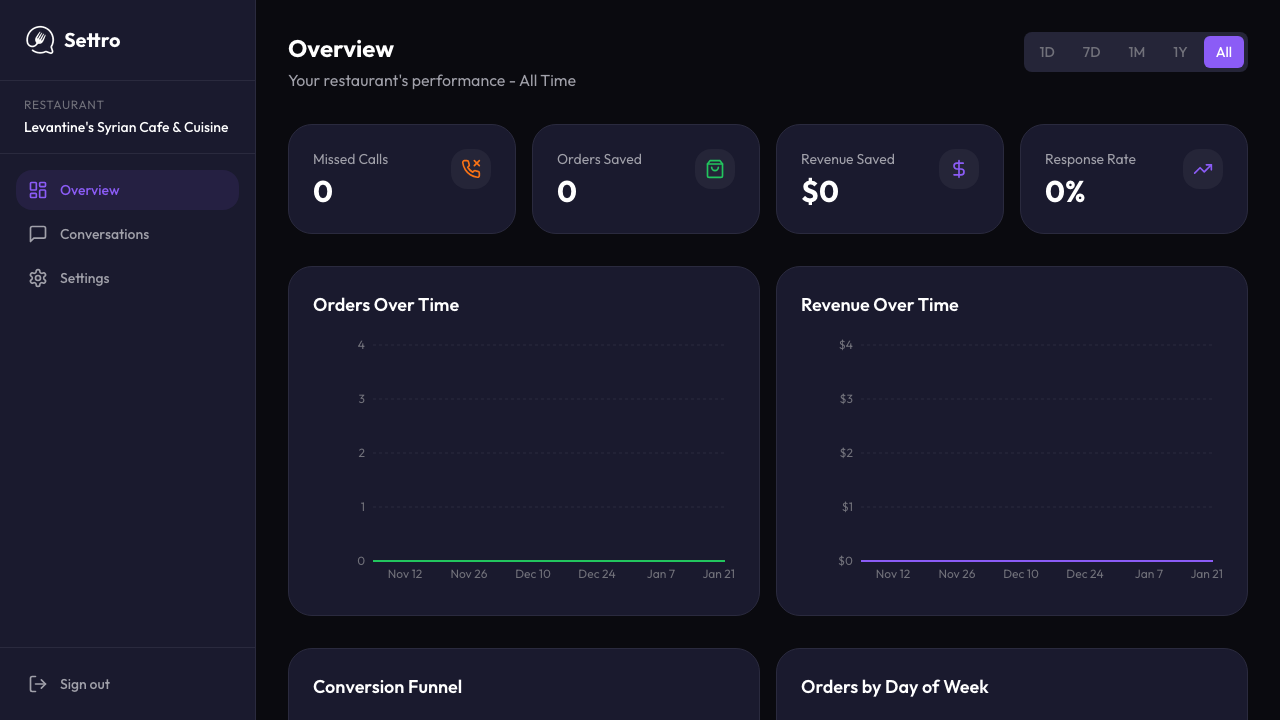
This hub now surfaces public proof from the app workflow before the detailed campaign question pages rely on those claims. The proof includes dashboard screenshots from Settro's app docs and exact capability language already present in the product surface.

Settro dashboard overview screenshot
Public proof image sourced from Settro's app docs, showing the dashboard summary view used to ground reporting claims on this page.
Audience targeting

The campaign flow includes behavior-based audience segments

Settro's campaign creation flow includes all customers, repeat customers, inactive customers, high value, and new customers as explicit audience options.

Channel selection

Instagram, Facebook, and SMS are separate campaign targets

The public proof on this page is based on Settro's app workflow, which supports Instagram DM, Facebook DM, and SMS channel targeting with plan-aware entitlements.

Delivery reporting

Campaign reporting tracks recipients, sent, delivered, and failed counts

Settro's campaign detail workflow exposes delivery metrics and completion status so owners can separate campaign activity from campaign outcome.

Dashboard summary

The reporting story extends past campaigns into the broader dashboard

Settro's dashboard loads missed-call recovery, order sources, busy-hour signals, and other summary views that help owners tie campaign work back to operating results.

Best fit for

  • Restaurants trying to reactivate inactive or repeat customers without sending the same message to everyone.
  • Operators who want campaign reporting that separates channel activity, delivery, and downstream business results.
  • Teams already using Instagram, Facebook, or SMS and trying to make retention marketing more operationally consistent.

How the workflow should work

Step 1

Choose a real audience segment

Campaigns perform better when the restaurant defines who the message is for before writing the message itself.

Step 2

Send through the right channel mix

Instagram, Facebook, and SMS should be selected intentionally based on entitlement, customer behavior, and the kind of campaign being run.

Step 3

Review delivery and downstream results together

The restaurant needs to see what was sent, what was delivered, and what happened after the campaign so the next campaign improves.

What to verify before you buy

  • Audience segments are defined clearly enough to compare campaign results over time.
  • Channel targets are selected intentionally instead of being blended together by default.
  • Delivery reporting shows sent, delivered, and failed results separately.
  • The dashboard helps connect campaign work back to broader restaurant performance signals.

How campaigns connect to the rest of the direct-order system

Re-engagement campaigns are strongest when they are not isolated from the rest of the restaurant's demand system. The same business also needs phone recovery, social ordering, and clear reporting so campaign activity can be interpreted in context.

Flow 1

A guest may first enter the system from a missed phone call, a DM conversation, or an earlier order.

Flow 2

Campaigns can bring that guest back through Instagram, Facebook, or SMS when the targeting is clear.

Flow 3

Dashboard reporting matters because it helps the owner compare campaign activity with broader order-source and performance signals.

Generic option vs Settro

What matters Generic option Settro
Audience strategy Blast the full list when sales feel slow Targeted segments such as inactive, repeat, or high-value customers
Channel reporting One blended social result bucket Instagram, Facebook, and SMS handled as distinct campaign channels
Performance review Total sends with little downstream context Delivery metrics plus dashboard-level reporting signals

Common questions

Why publish app proof on this page first?

Because the campaign question pages should cite claims that are already surfaced publicly on settro.net instead of relying on private product truth alone.

Does this page claim every campaign will drive revenue?

No. The point is to show the workflow and the reporting surface clearly enough that owners can evaluate whether the system matches how they want to run campaigns.

Should I start with this page or the campaign question pages?

Start here if you are evaluating the campaign workflow itself. Start with the question pages if you want an answer about inactive customers, KPIs, attribution, or specific campaign types first.

Questions restaurant owners ask

These routes answer explicit owner questions in plain operator language first. Use them when the search intent is a problem statement, then come back here when you want to evaluate the workflow itself.

Owner question
How do I win back inactive restaurant customers?
Start by defining inactivity clearly, segmenting the audience, and sending one simple offer or reminder through the channels your customers actually use. Restaurants usually win back inactive customers with targeted follow-up and clean reporting, not with blasting the full customer list every time a slow week shows up.
Owner question
What restaurant text message campaigns actually work?
Restaurant text-message campaigns usually work when they are targeted, timely, and specific. Broad blasts with vague copy tend to underperform. Owners usually get better results from campaigns tied to an audience segment, one clear offer or reminder, and reporting that shows whether the message created return orders instead of just more message volume.
Owner question
How do I track restaurant campaign performance?
Track campaign performance in layers: audience targeted, messages delivered, customer responses, and downstream order behavior. Restaurants usually get better decisions when they separate campaign activity from campaign outcome. Delivery alone is not performance, and revenue alone is too late if you never learn which audience, channel, or message actually moved.
Owner question
What restaurant marketing KPIs should I track?
Track restaurant marketing KPIs in three groups: demand created, orders completed, and repeat behavior improved. Owners usually need a tighter KPI set than they think. The most useful scorecard is the one that shows which channel or campaign created more direct orders, more repeat customers, or less wasted spend, not the one with the most widgets.
Owner question
How do I know if Instagram or Facebook is driving orders?
Track Instagram and Facebook separately at the campaign and order-source level. Owners usually need both: campaign-side reporting that shows what was sent or published, and downstream reporting that shows which source actually led to conversations, direct orders, or repeat purchases. If both channels are blended together, the answer stays fuzzy.

Related resources

Sources and supporting context